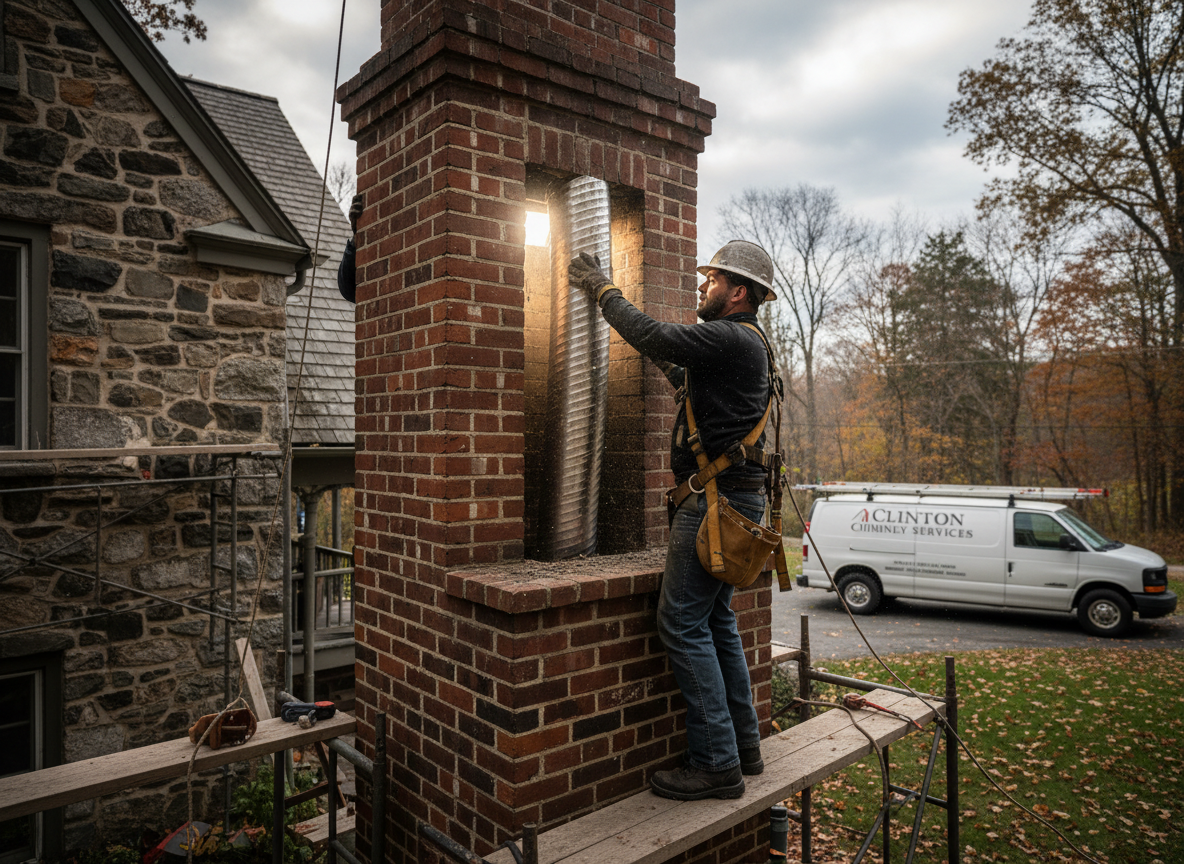
Chimney relining replaces or reinforces the interior flue in older masonry chimneys common throughout Clinton Central and West Clinton. In Davis County the semi-arid climate produces hot dry summers that shrink and crack clay tiles, followed by cold snowy winters that drive repeated freeze-thaw cycles. A new stainless-steel or cast-in-place liner restores draft while resisting acidic condensation that forms when wood smoke meets sub-freezing temperatures. Proper sizing also prevents the oversized flues found in many 1970s-1990s homes from cooling flue gases too quickly and accelerating creosote buildup.
Relining work here must account for wind-driven snow that enters uncapped chimneys near Clinton City Park and the flat terrain that funnels cold air down flues from Ogden and Roy. Technicians first video-scan the flue to locate offsets or spalling caused by decades of salt-laden moisture. They then select a liner rated for the actual chimney height and the 6-8 inch clearances typical in single-story ranch houses. Installation includes sealing the liner at the smoke chamber so that negative pressure from winter winds does not pull combustion gases back into living spaces.
Homeowners in Clearfield and surrounding areas often discover that unlined or damaged flues violate current IRC requirements once a new appliance is installed. Relining brings the chimney into compliance without full tear-out. The process also reduces the risk of flue fires that spread rapidly through the dry, resin-heavy wood burned during long Davis County winters. Annual inspections after relining catch early liner deformation before it allows carbon monoxide to migrate through mortar joints into attics.
Seasonal Guidance
Schedule relining in late summer before the first snow so the new liner cures fully. Avoid winter repairs when scaffolding on icy roofs near West Clinton becomes hazardous and flue temperatures swing too quickly for proper curing of cast-in-place materials.
Technician insight
In Clinton, the thing that catches most people out with Chimney Relining is how quickly the freeze-thaw cycles in our semi-arid winters open hairline cracks in pre-1990 clay flues, especially on the north sides of homes in West Clinton where wind-driven snow sits longest.
Cracked Flue Near Clinton City Park
A homeowner in Clinton Central reported poor draft after heavy snow. Inspection showed multiple freeze-thaw cracks in the original clay liner. A stainless-steel liner was installed to restore proper draft and resist acidic condensation. The chimney now performs reliably through cold Davis County nights.
How it works
- 1
Flue Inspection
Camera scan from roof to firebox identifies cracks, offsets, and creosote depth in Clinton chimneys.
- 2
Flue Cleaning
Remove all debris and loose material so the new liner bonds directly to the existing masonry.
- 3
Liner Selection and Measurement
Measure height, diameter, and offsets; choose stainless or cast-in-place material rated for local winter conditions.
- 4
Installation and Testing
Insert liner, seal connections, and perform draft and smoke testing before final cleanup.
Pricing
Upfront quotes based on chimney height, liner material, and access from the roof.