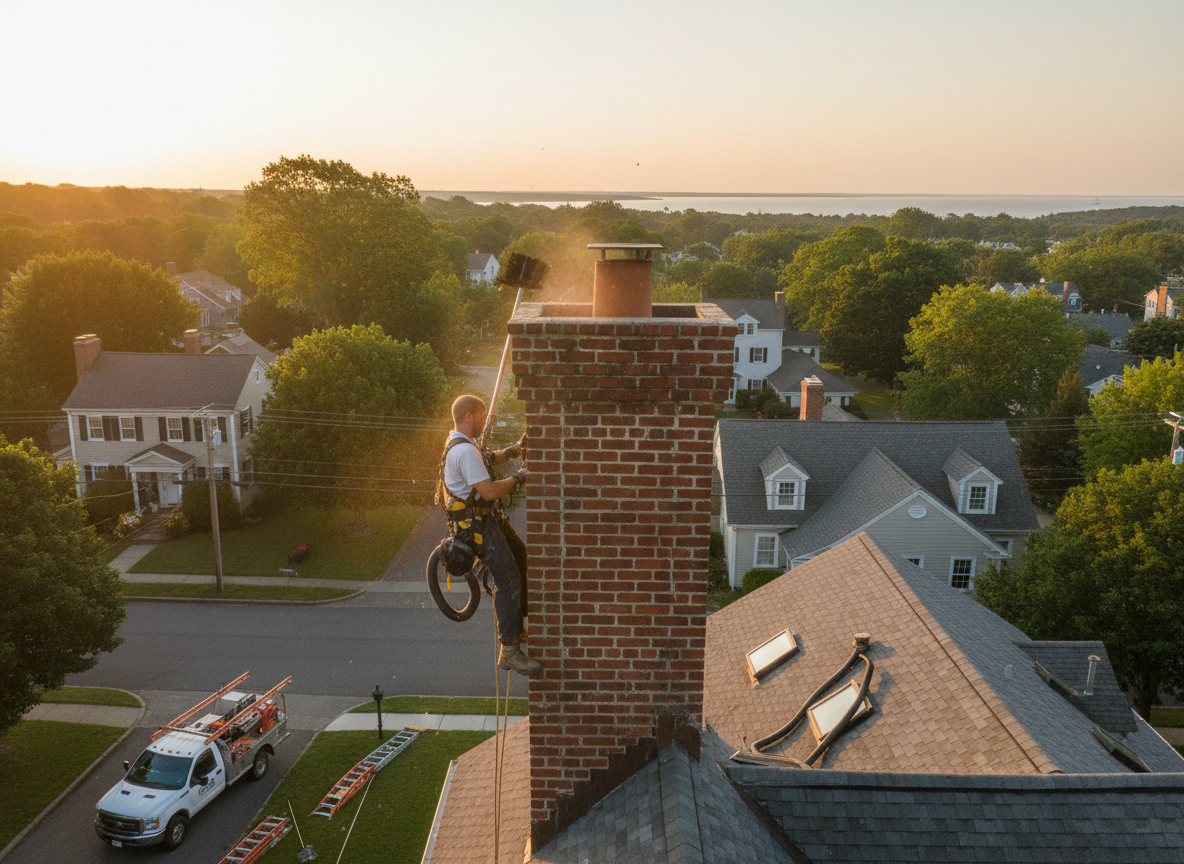
Chimney maintenance in Clinton addresses the effects of Davis County's semi-arid climate on masonry. Hot summers dry out mortar joints while cold snowy winters drive freeze-thaw damage, especially in homes built before 1980 in Clinton Central and West Clinton. Technicians inspect flue liners, crown seals, and flashing where snow accumulation near Clinton City Park accelerates water intrusion. Neglected creosote buildup combined with wind-driven rain from the west creates hidden voids that allow carbon monoxide to migrate into living spaces.
Standard maintenance includes removing debris from the smoke chamber, checking damper operation, and sealing the crown with a flexible elastomer rated for -20°F. In neighborhoods bordering Roy and Clearfield, many two-story brick homes have offset chimneys that trap moisture against the roof deck. A thorough sweep followed by a camera scan reveals hairline cracks before they widen into full separation. Homeowners along 1500 West often notice draft issues first because prevailing winds push exhaust back down the flue during inversion events common in winter.
Annual visits prevent the need for full rebuilds when mortar erodes between Ogden and Clearfield. Maintenance also covers spark arrestor screens that clog with cottonwood seeds in spring and ice in January. Technicians document every joint and liner condition so owners can track changes over successive seasons rather than facing sudden failure after a heavy snow load.
Technician insight
In Clinton, the thing that catches most people out with Chimney Maintenance is how quickly freeze-thaw cycles open mortar joints on west-facing chimneys in West Clinton homes built in the 1970s. Snow sits against the crown longer than people expect, and once water reaches the flue liner the draft pulls it straight into the house. Checking those joints every year before the first heavy snow prevents the bigger rebuilds we see every spring near Clinton City Park.
West Clinton Brick Chimney After Early Snow
A two-story home in West Clinton showed poor draft after the first November snow. Inspection found open mortar on the north side and a hairline crack in the crown. We removed loose material, pointed the joints, and applied a breathable sealer. Draft returned to normal and the owner avoided water tracking into the attic during the rest of the winter.
How it works
- 1
Initial Assessment
Arrive at the Clinton address and examine exterior masonry, crown, and flashing for winter damage before opening the flue.
- 2
Interior Sweep and Inspection
Remove creosote and debris, then run a camera through the flue to locate cracks or liner separation common after freeze-thaw cycles.
- 3
Repairs and Sealing
Tuck-point deteriorated mortar, reseal the crown, and verify damper function before testing draft under local wind conditions.
- 4
Final Documentation
Provide photos and notes on condition for future reference, noting any changes since the last service in Davis County homes.
Pricing
Pricing varies by chimney height, access, and condition; most Clinton maintenance visits fall in a mid-range bracket.