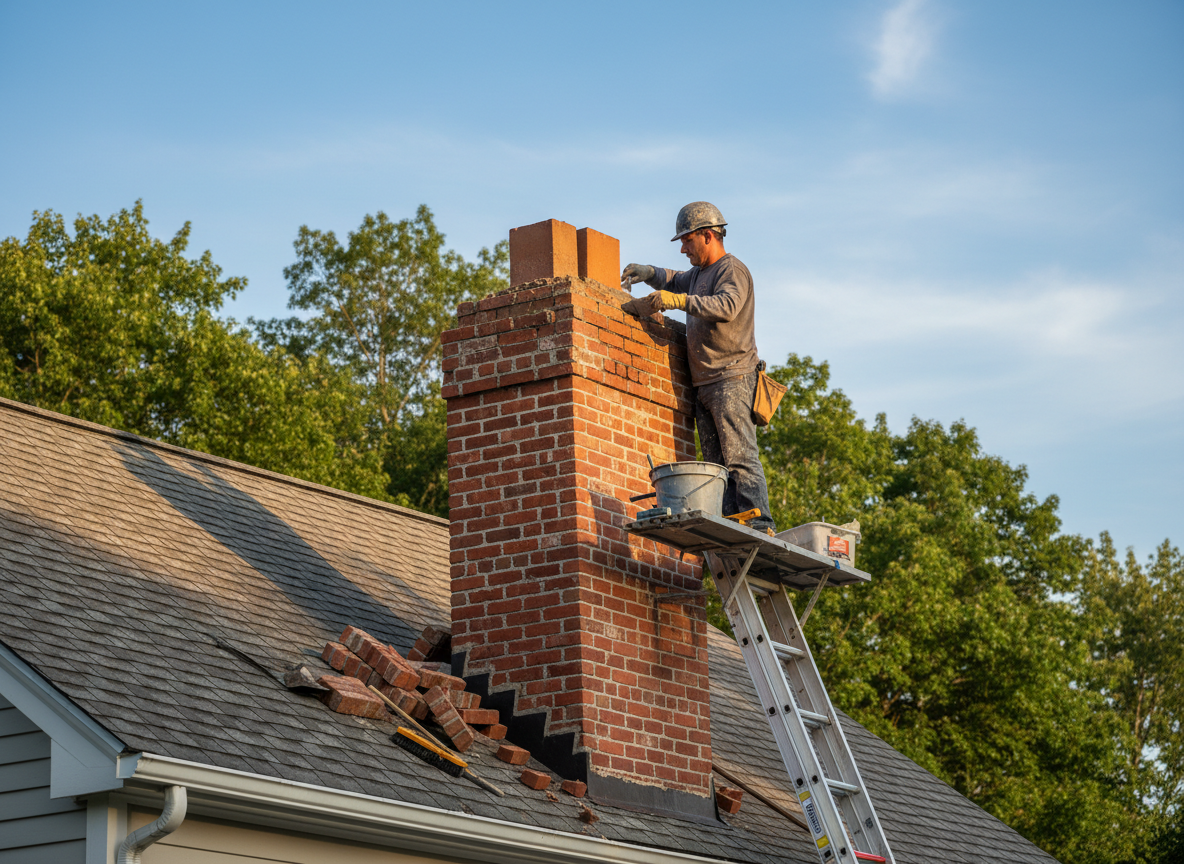
Clinton sits in a semi-arid climate where cold snowy winters bring repeated freeze-thaw cycles that drive water into mortar joints and cause bricks to spall. Homes in Clinton Central and West Clinton often have masonry chimneys from the 1970s and 1980s that were never designed for the moisture load that comes with heavy snow accumulation near Clinton City Park. Once the outer wythe cracks, water reaches the flue liner and accelerates deterioration that can affect draft and allow carbon monoxide to migrate into living spaces.
Tuckpointing in this area requires removing the original hard Portland mortar without damaging the softer brick, then installing a lime-rich mix that matches the original compressive strength. North-facing chimneys in West Clinton see the worst damage because they stay shaded and hold snow longest. Crews must also check the crown and flashing where roof runoff meets the chimney, since Davis County wind can drive snow under standard step flashing and rot the sheathing beneath.
Repair work here frequently includes rebuilding the top three to five courses when the corbel has separated, then applying a breathable masonry sealer that still allows vapor to escape. Ignoring the bond between the flue tile and the brick shell is a common shortcut that leads to liner movement the next winter. Every job starts with a camera inspection from the cleanout through the smoke chamber so the homeowner sees exactly where the masonry has separated from the flue.
Technician insight
In Clinton, the thing that catches most people out with Chimney Masonry Repair is how the north side of chimneys in West Clinton homes stays wet longest after snowstorms, so the mortar there fails first and the damage travels around the stack before homeowners notice.
Spalled bricks on north face after heavy snow
Homeowner in Clinton Central noticed loose pieces on the ground after a March snowmelt. Inspection showed the north wythe had lost mortar depth and several bricks were cracked through. Crew removed failed material, repointed with lime mortar, rebuilt the top corbel, and sealed the crown. Draft returned to normal and no further spalling occurred the following winter.
How it works
- 1
On-site inspection
Technician climbs and examines every joint, the crown, and the connection to the roof while documenting spalling, missing mortar, and water staining.
- 2
Mortar and brick assessment
Samples of existing mortar are checked for hardness; damaged bricks are counted and replacement stock is matched for color and texture.
- 3
Tuckpointing and rebuilding
Failed mortar is cut out to proper depth, new lime-based mortar is installed, and any loose or broken bricks are replaced with matching units.
- 4
Crown and flashing restoration
A new concrete crown is poured with proper slope and stainless flashing is integrated so snowmelt cannot enter the masonry.
Pricing
Upfront quotes after inspection; cost driven by number of courses requiring tuckpointing, brick replacement, and roof access difficulty.