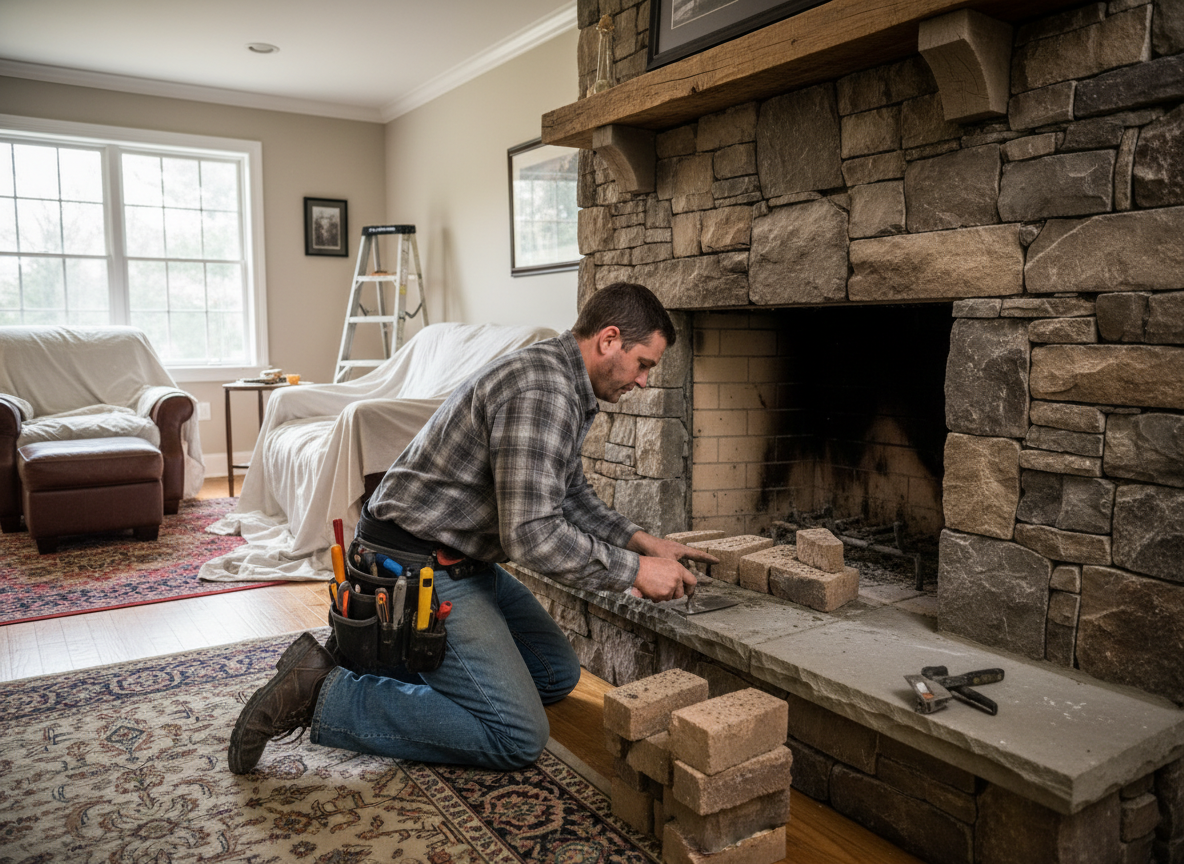
Clinton sits in a semi-arid zone where hot summers bake brick and mortar while cold snowy winters drive heavy fireplace use. Homes in Clinton Central and West Clinton often feature 1970s-1990s construction with single-wall metal or masonry fireboxes that develop cracks from repeated freeze-thaw cycles. Snow melt running off roofs near Clinton City Park can enter through deteriorated crowns and saturate the firebox, leading to spalling and dangerous carbon monoxide paths. Repair work here requires checking for hidden moisture behind the surround before any patching, because summer heat quickly turns trapped water into steam pressure that blows out new mortar.
Davis County code requires proper clearance to combustibles and functional dampers on all wood-burning units. In older West Clinton properties the original damper plates frequently seize from rust caused by winter condensation, forcing techs to replace the entire throat assembly rather than just lubricating. When working on homes near Roy or Clearfield borders, crews also watch for shared flues between townhomes that create drafting problems after one unit is repaired. Using refractory cement rated for 2000 degrees instead of standard mortar prevents future failure when the first hard freeze hits again.
Edge cases appear when homeowners in Ogden-adjacent neighborhoods convert fireplaces to gas logs without updating the chimney liner. The smaller flue diameter traps heat and warps the original clay liner, creating a job that starts as a simple gas conversion but ends with full stainless-steel relining. Always verify the firebox depth and hearth extension meet current setbacks before closing up walls, because retrofits in 1980s Clinton tract homes frequently violate the four-inch clearance rule once insulation is added.
Technician insight
In Clinton, the thing that catches most people out with Fireplace Repair is how our cold snowy winters drive meltwater into older brick chimneys along West Clinton streets, rotting the firebox from behind before summer heat turns the hidden damage into a full collapse.
Seized Damper on 1980s Clinton Central Home
Homeowner reported smoke backing into the living room during the first cold snap. Inspection found the original damper frozen shut by rust from winter condensation and a cracked firebox from repeated freeze cycles. Crew replaced the damper assembly and patched the firebox with refractory cement rated for local temperature swings. The fireplace now drafts correctly and the family resumed safe use through the rest of the snowy season.
How it works
- 1
Site Assessment
Technician arrives at the Clinton address, inspects the firebox, damper, and flue from the roof down, and checks for moisture damage from recent snow.
- 2
Diagnosis and Quote
Identify exact failure points such as cracked refractory or seized damper, then provide an upfront quote based on materials needed for that specific home.
- 3
Repair Execution
Remove damaged sections, install new refractory panels or metal components, reseal the throat, and confirm proper draft before finishing.
- 4
Final Testing
Perform a cold smoke test and verify safe operation with the homeowner present before leaving the property.
Pricing
Upfront quotes based on damage extent and materials; no flat rates because each Clinton home presents different conditions.