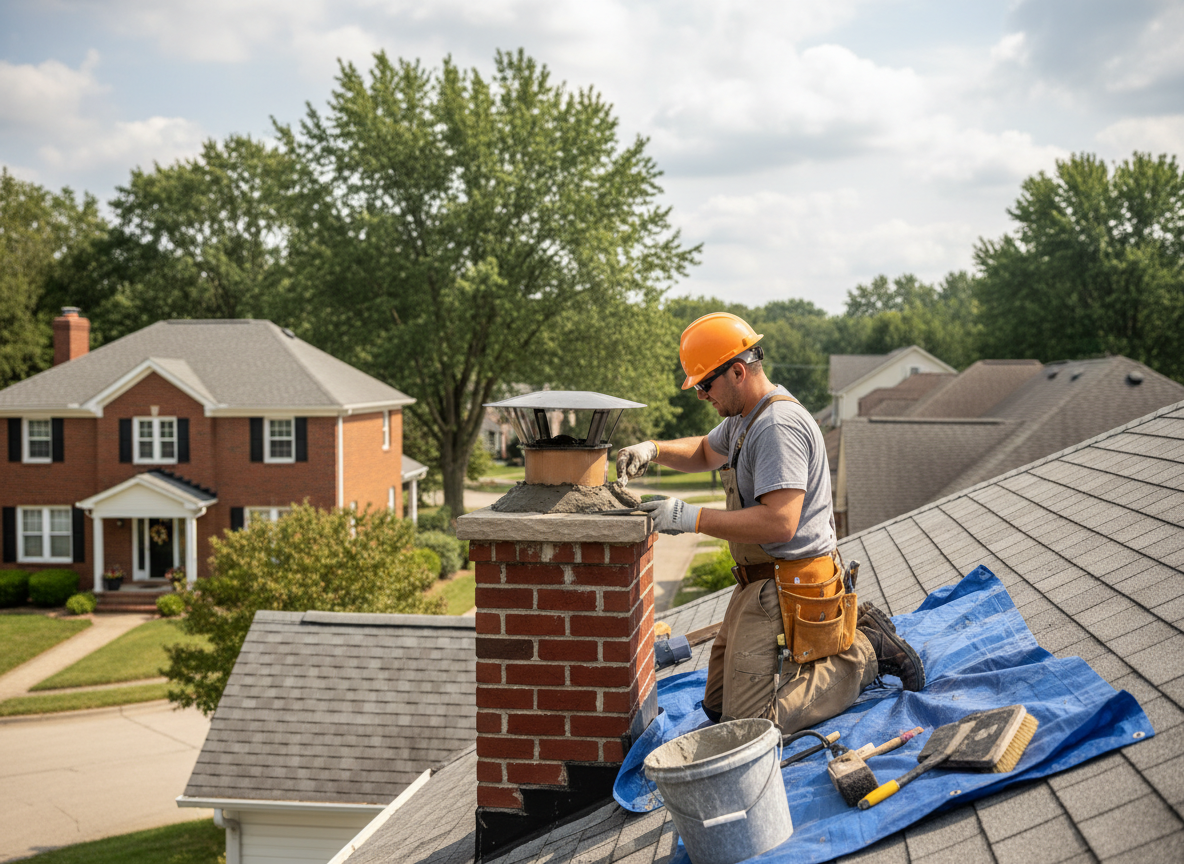
Chimney caps in Clinton take direct hits from the shift between hot semi-arid summers and heavy snow loads during cold winters. Homes in Clinton Central and West Clinton often have masonry chimneys from the 1970s and 1980s that were never designed for the freeze-thaw cycles common in Davis County. When ice builds up around the flue, it can bend or crack the cap, letting water run down the flue and damage the crown or liner. We see this pattern every spring when homeowners in neighborhoods near Clinton City Park call after noticing draft problems or water stains on ceilings.
Repair work here starts with checking how the cap attaches to the flue tile and whether the existing flashing still seals against the roof. Many roofs in the area use asphalt shingles that expand and contract with temperature swings, so a loose cap often pulls the flashing away from the chimney. We carry stainless replacements sized for standard 8x8, 8x12, and 12x12 flues found on local single-story homes. In West Clinton, where wind can funnel between houses, we add extra straps to keep the new cap from lifting during gusts that come off the Great Salt Lake.
Access on Clinton homes can be tricky because many lots back up to irrigation canals or have narrow side yards that limit ladder placement. We always verify the roof pitch and check for soft spots in the decking before climbing, especially on homes near Ogden or Roy where older plywood can delaminate after years of attic heat. A proper cap replacement also includes sealing the joints with high-temperature silicone rated for the rapid temperature changes that occur when wood stoves run during January cold snaps.
Seasonal Considerations
Chimney caps fail most often after the first big snow of the season or during spring melt. Homeowners in Clearfield and Roy notice the same issues because the same weather systems hit the entire Davis County corridor. Waiting until the next cold front moves in can turn a cap swap into water damage inside the home.
Technician insight
In Clinton, the thing that catches most people out with Chimney Cap Repair is how snow drifts against the cap on the north side of single-story homes in West Clinton. Those drifts hold moisture against the metal long after the rest of the roof has dried, and the corrosion starts from the inside where you cannot see it until the cap collapses inward.
Crushed Cap After Early Snow in Clinton Central
Homeowner reported poor draft following the first heavy snow. We found the original cap flattened by ice and water already entering the flue. Replaced the cap with a taller model that sheds snow better and resealed the flashing. Draft returned and no further water entered the chimney.
How it works
- 1
Site Assessment
We arrive at the Clinton address, inspect the cap from the roof, and check for ice damage, loose flashing, and flue fit while noting roof access and nearby obstacles.
- 2
Cap Removal
Old cap and any damaged flashing are taken off, debris is cleared from the flue top, and the tile is examined for cracks caused by winter freeze-thaw cycles.
- 3
New Cap Installation
A properly sized stainless cap is secured with straps rated for local wind loads, flashing is reset or replaced, and all seams are sealed against snow melt.
- 4
Final Check
We test draft from inside, confirm no water entry points remain, and walk the homeowner through the work before leaving the property.
Pricing
Cost depends on roof access, cap size, and whether flashing must be replaced; we provide an upfront quote after the roof inspection.