2026-11-17 ·
Removing Bird Nests From Chimneys Safely in Clinton
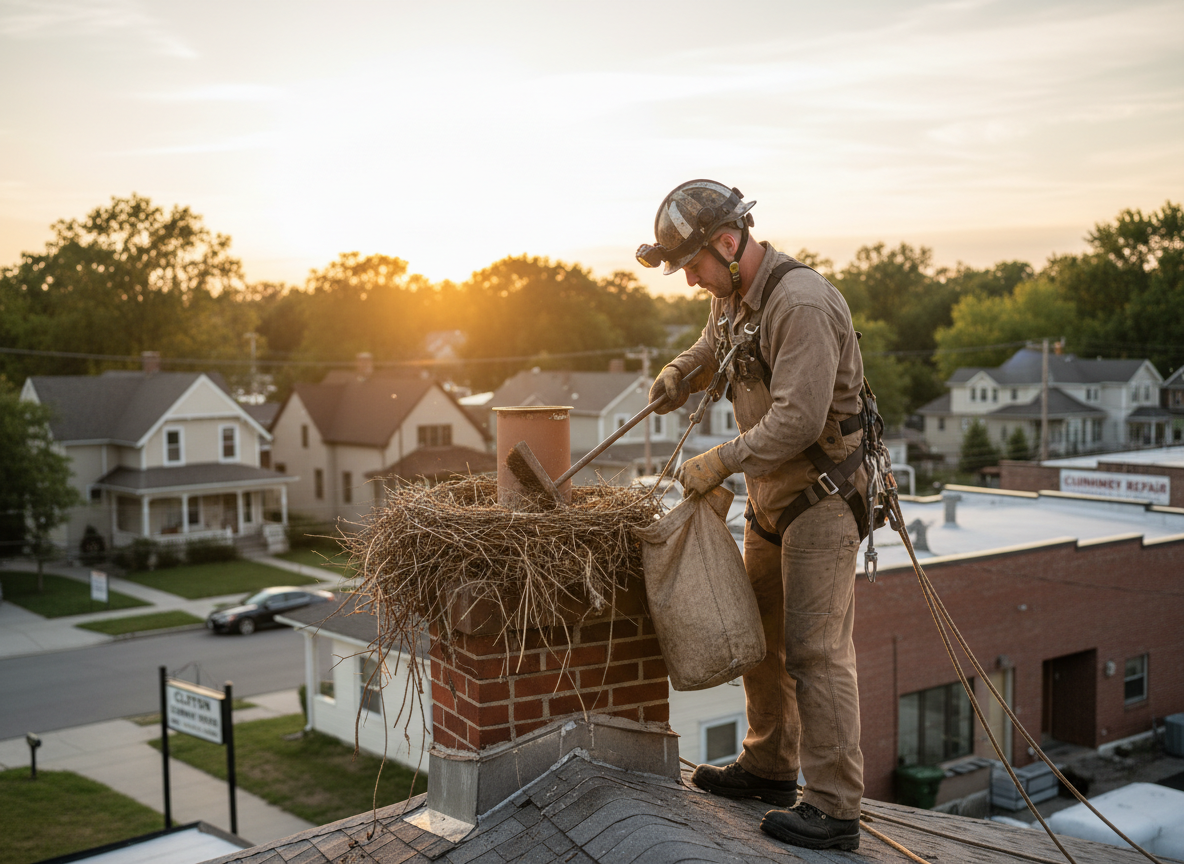
Removing bird nests from chimneys in Clinton starts with confirming the nest is inactive and using a telescoping inspection camera to assess location and species before any extraction begins. In Davis County homes, especially those in Clinton Central with 1970s brick chimneys, starlings and swallows often build in the flue during spring. Cold snowy winters drive birds indoors for shelter while hot summers leave debris that can block draft once temperatures drop again. Always check for eggs or fledglings first because federal law protects most native species. Professional removal prevents soot and creosote disturbance that could ignite during later fireplace use near West Clinton.
Identifying Active Nests in Clinton Chimneys
Clinton's semi-arid climate with sudden winter storms pushes birds into chimneys on houses built before 1990 in Clinton Central and West Clinton. Look for twigs or grass protruding from the crown after March, or listen for chirping when the wind shifts from the Great Salt Lake direction. Droppings on the roof near the stack or a persistent smoky smell indoors signal blockage. In nearby Roy and Clearfield, similar brick and metal chimneys show the same patterns during inversions. Document the signs with photos before proceeding so you can compare after cleaning. These observations help decide if the nest sits in the smoke chamber or lower in the flue where water from melting snow can worsen mortar damage.
Safety Steps Before Any Removal
Wear a respirator rated for soot and a headlamp when opening the damper because accumulated creosote in Clinton homes can release fine particles during disturbance. Turn off the furnace and water heater connected to the chimney to avoid carbon monoxide backdraft while working. Place heavy canvas drop cloths in the fireplace and seal the room with plastic sheeting taped at doors. Check local Davis County ordinances because some areas near Ogden require permits for wildlife handling. Keep a fire extinguisher rated for Class A and B fires within reach since dry nesting material ignites easily once dislodged. These preparations reduce risk when working on roofs that collect ice during the cold months common in northern Utah.
Step-by-Step Nest Extraction Process
Begin at the top using a chimney brush sized for your flue diameter to loosen material without forcing debris downward. Pull out larger sticks and grass with a hooked rod after confirming no birds remain inside. Vacuum loose feathers and nesting material with a HEPA-filter shop vac connected to the cleanout door. Rinse the flue walls with a mild biodegradable solution if creosote has mixed with nest residue, then allow full drying before reassembly. In Clinton's variable weather, schedule this work on dry days to prevent water from entering through an open crown. Follow up with a camera inspection to verify the flue is clear down to the smoke shelf.
When Professional Help Prevents Further Issues
Call a technician when nests sit below the smoke chamber or when masonry shows cracks from repeated freeze-thaw cycles in Davis County winters. Chimney Cleaning Service crews carry the proper rods and vacuums sized for 8-inch and 12-inch flues common in Clinton Central homes. Chimney Inspection Service can confirm whether the liner needs Chimney Relining after repeated nesting. Homeowners in West Clinton often combine nest removal with Chimney Maintenance before the first cold snap arrives from the mountains. What Causes Poor Draft in Chimneys During Davis County Inversions explains how leftover debris worsens draft problems once snow returns.