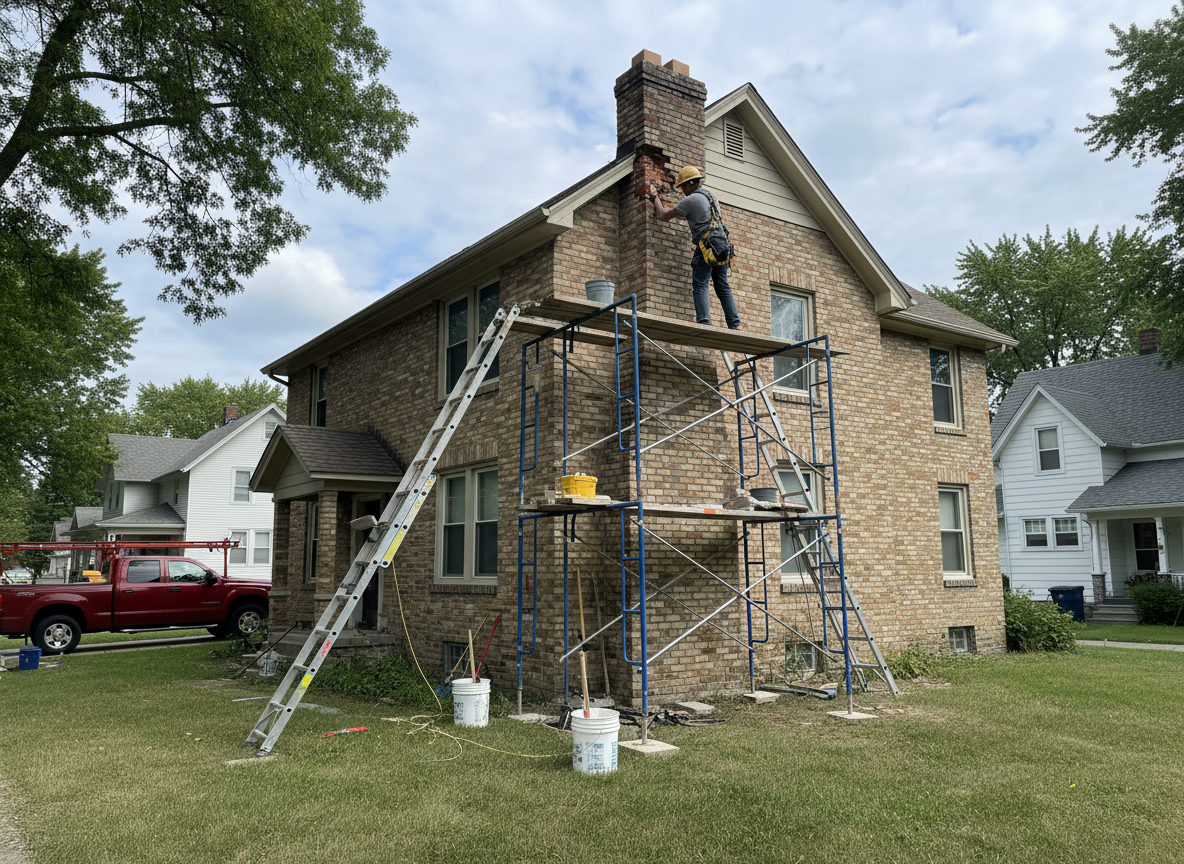
Chimney repair in Clinton often involves addressing mortar joints and flue liners damaged by repeated freeze-thaw cycles during the cold snowy winters typical of Davis County. Homes in Clinton Central and West Clinton, many built decades ago, frequently show spalling bricks and loose flashing where wind-driven snow infiltrates around the crown. Technicians at Graystack Company start by inspecting from the roofline near Clinton City Park down through the attic to locate hidden water paths that only appear after spring thaw.
Hot summers in the semi-arid climate dry out clay flue tiles, creating hairline cracks that widen once temperatures drop below freezing. This is common in older housing stock along 1500 West where original masonry has settled unevenly on the local soil. Repair work here usually requires stainless steel liners or refractory cement rather than basic tuckpointing because the temperature swings accelerate deterioration faster than in milder nearby cities like Clearfield.
Wind exposure across open areas west of Clinton adds another layer, loosening chimney caps and allowing embers or debris to enter during gusty winter storms. Proper repair includes securing the cap with stainless hardware rated for heavy snow load and ensuring the chase is sealed against the driving rain that accompanies spring melt. These steps prevent carbon monoxide risks that surface when liners fail in occupied homes throughout the county.
Technician insight
In Clinton, the thing that catches most people out with Professional Chimney Repair is how the freeze-thaw cycles from our snowy winters crack flue liners in pre-1990s homes in Clinton Central faster than homeowners expect, especially when the original clay tiles have already dried out from hot summers.
Loose Crown After Winter Storm
A West Clinton homeowner noticed water stains on the ceiling after a heavy snow. Inspection revealed the crown had cracked from repeated freeze-thaw and allowed meltwater past the flashing. We rebuilt the crown with reinforced mortar, installed a new stainless cap, and sealed the chase. No further leaks appeared once temperatures rose again.
How it works
- 1
Initial Inspection
Assess the chimney from roof to firebox noting cracks, loose bricks, and water stains specific to Clinton winters.
- 2
Diagnosis and Quote
Identify the root cause such as freeze damage or settling and provide an upfront quote before any work begins.
- 3
Material Selection
Choose liners or mortars suited to semi-arid temperature swings and snow load conditions in Davis County.
- 4
Repair Execution
Perform tuckpointing, liner installation, or crown rebuilding while protecting surrounding roof areas.
- 5
Final Verification
Test draft and confirm no water intrusion remains after repair.
Pricing
Upfront quotes provided after on-site inspection; cost varies with extent of freeze-thaw damage and liner needs.