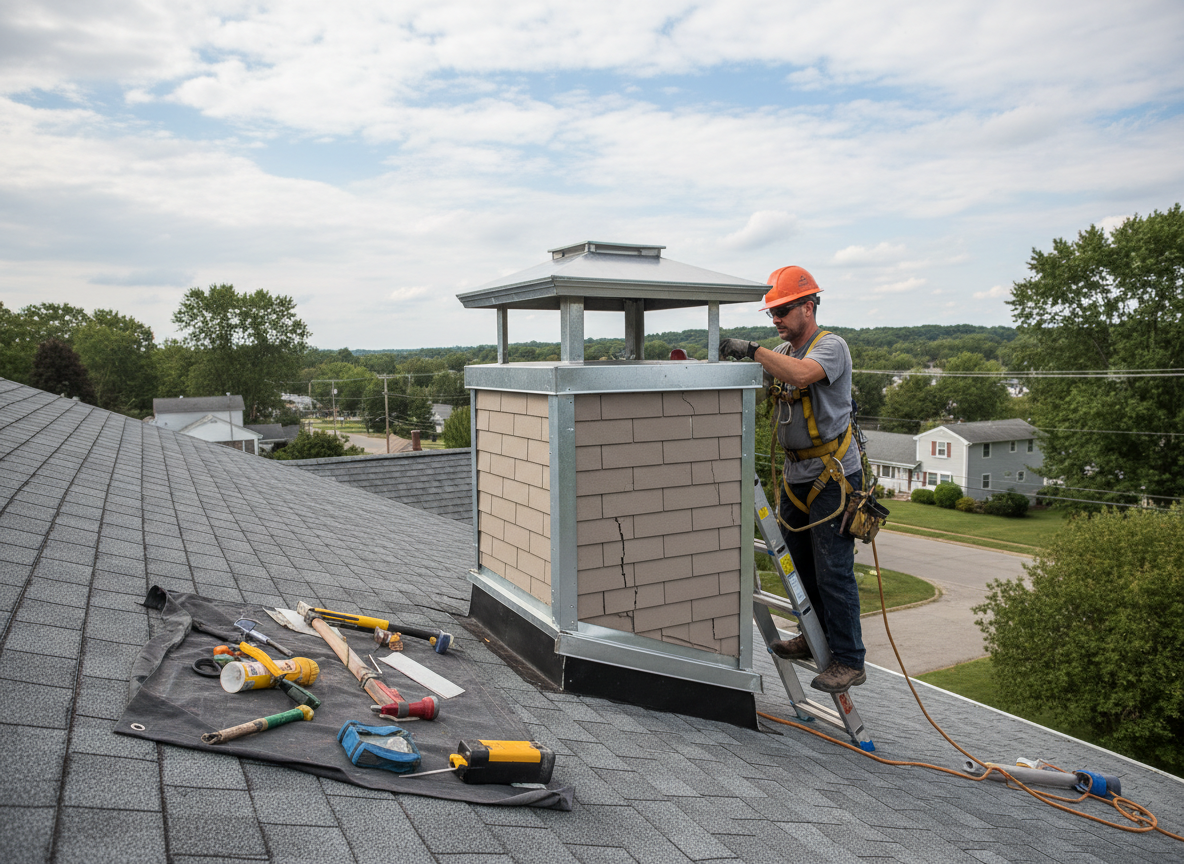
Prefabricated chimneys in Clinton homes often use stainless steel or galvanized sections that expand and contract with the semi-arid climate swings. Hot summers dry out seals while cold snowy winters drive moisture into joints, especially on roofs exposed to wind from the west. In Clinton Central and West Clinton, homes from the 1970s onward frequently show cracked collars or separated flue sections after repeated freeze-thaw cycles. Repair work here requires matching the original pipe gauge and checking clearances to nearby framing that can shift with soil movement common in Davis County.
Near Ogden, Roy, and Clearfield, technicians see more corrosion at the roof line where snow lingers on north-facing slopes. Prefabricated units demand careful removal of old gaskets without damaging the chase, then installation of high-temperature silicone or rope seals rated for the temperature extremes. Edge cases include offset sections that settle unevenly on older foundations or blocked rain caps that allow water to pool inside the flue during spring runoff. Proper diagnosis avoids unnecessary full replacement by isolating the failed segment.
Work in these neighborhoods also accounts for attic insulation types that trap heat around the chimney, raising the risk of creosote issues even in metal systems. Technicians inspect for proper support brackets that may have loosened from vibration or roof traffic. Repairs focus on restoring the original draft without altering the manufactured design, which can void performance if mismatched parts are used. Homeowners in West Clinton often discover problems only after interior staining appears following a heavy snow event.
Technician insight
In Clinton, the thing that catches most people out with Prefabricated Chimney Repair is how our cold snowy winters push moisture under the flashing on west-facing roofs in West Clinton, where the original thin collars crack from years of expansion and contraction.
Joint Separation After Winter in Clinton Central
A homeowner noticed interior staining after heavy snow. Inspection revealed separated sections on the prefabricated chimney where seals had dried from summer heat then froze. We replaced the damaged collar and resealed the joints. The unit now sheds runoff without further leaks.
How it works
- 1
Initial Inspection
Examine the prefabricated sections, joints, and flashing from roof to firebox for separation or corrosion caused by local weather cycles.
- 2
Problem Assessment
Identify the exact failed component and note any effects from nearby terrain or roof pitch common in Clinton Central homes.
- 3
Targeted Repair
Replace or reseal the damaged segment using compatible materials while maintaining original clearances and support.
- 4
Final Testing
Verify draft and weather resistance before leaving the site, confirming the repair holds through simulated winter conditions.
Pricing
Upfront quotes provided after inspection, with costs driven by section access and extent of weather-related damage.