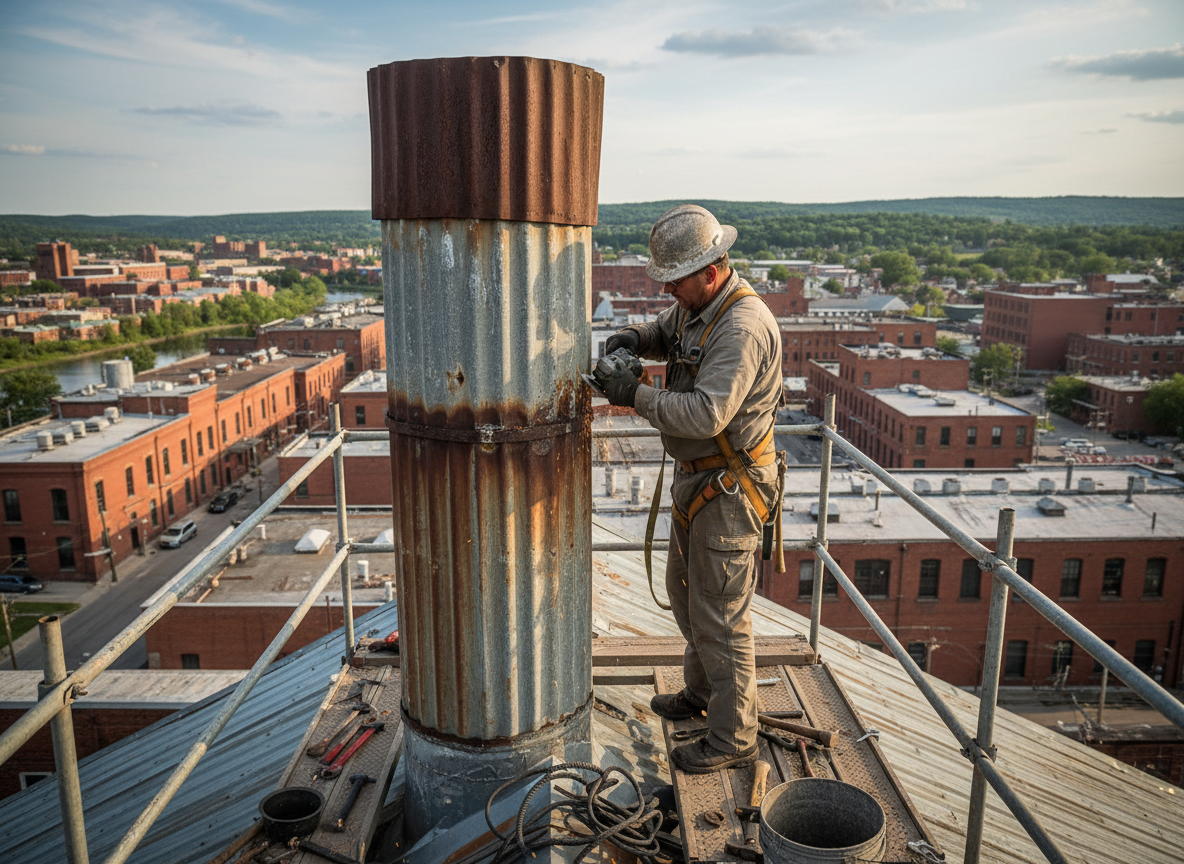
Metal chimneys in Clinton Central and West Clinton homes often suffer from seam separation and corrosion after repeated freeze-thaw cycles during Davis County winters. The semi-arid climate brings hot dry summers that expand metal sections followed by heavy snow loads that contract them, stressing factory joints and flashing. Older housing stock near Clinton City Park commonly uses single-wall or double-wall metal liners installed decades ago that now require targeted section replacement rather than full rebuilds. Technicians must check for creosote buildup accelerated by cold starts in winter and ensure proper clearances where roofs meet metal stacks.
In nearby Ogden, Roy, and Clearfield, wind-driven rain and snow infiltration through damaged metal caps creates interior rust that spreads downward into the flue. Repair work here focuses on replacing corroded elbows and tees while preserving the existing chase where possible. Homeowners in these neighborhoods frequently discover hidden damage only after water stains appear on ceilings during spring thaw. Proper sealing with high-temperature silicone and stainless steel bands prevents recurrence in the variable Davis County conditions.
Edge cases include metal chimneys routed through attics with insufficient insulation, where condensation forms on cold days and drips back into the firebox. Code requirements in Clinton call for proper termination height above the roofline to avoid downdrafts during winter storms. Repairs must also address any settling of the home foundation that shifts the metal stack out of plumb, a common issue on the flatter terrain west of 1500 W.
Inspection always starts at the rain cap and works down to the appliance connection, testing draft with a smoke test after any section work. Materials used are limited to 304 or 316 stainless to resist the salt air influence that occasionally reaches inland from the Great Salt Lake.
Technician insight
In Clinton, the thing that catches most people out with Metal Chimney Repair is the way cold snowy winters followed by rapid summer heating makes factory seams on 1980s-1990s metal stacks split right at the elbows, especially on homes west of 1500 W where wind hits harder.
Seam Failure on West Clinton Metal Stack
Homeowner noticed water stains on the ceiling after spring snowmelt. Inspection found split seams on the double-wall metal chimney allowing snow infiltration. We replaced the damaged elbow section and resealed the flashing. Draft tested clean and no further leaks reported through the next winter.
How it works
- 1
Initial Inspection
Technician examines the full metal stack from cap to appliance, noting seam condition, flashing, and any offset in Clinton homes.
- 2
Damage Assessment
Identify corroded sections, failed joints, and draft issues caused by local winter snow and summer heat cycles.
- 3
Section Replacement
Remove and replace damaged metal pieces with matching stainless components while maintaining proper clearances.
- 4
Sealing and Testing
Apply high-temperature sealant, secure new bands, and perform smoke test to confirm draft before leaving the site.
Pricing
Upfront quotes provided after on-site inspection at your Clinton address.