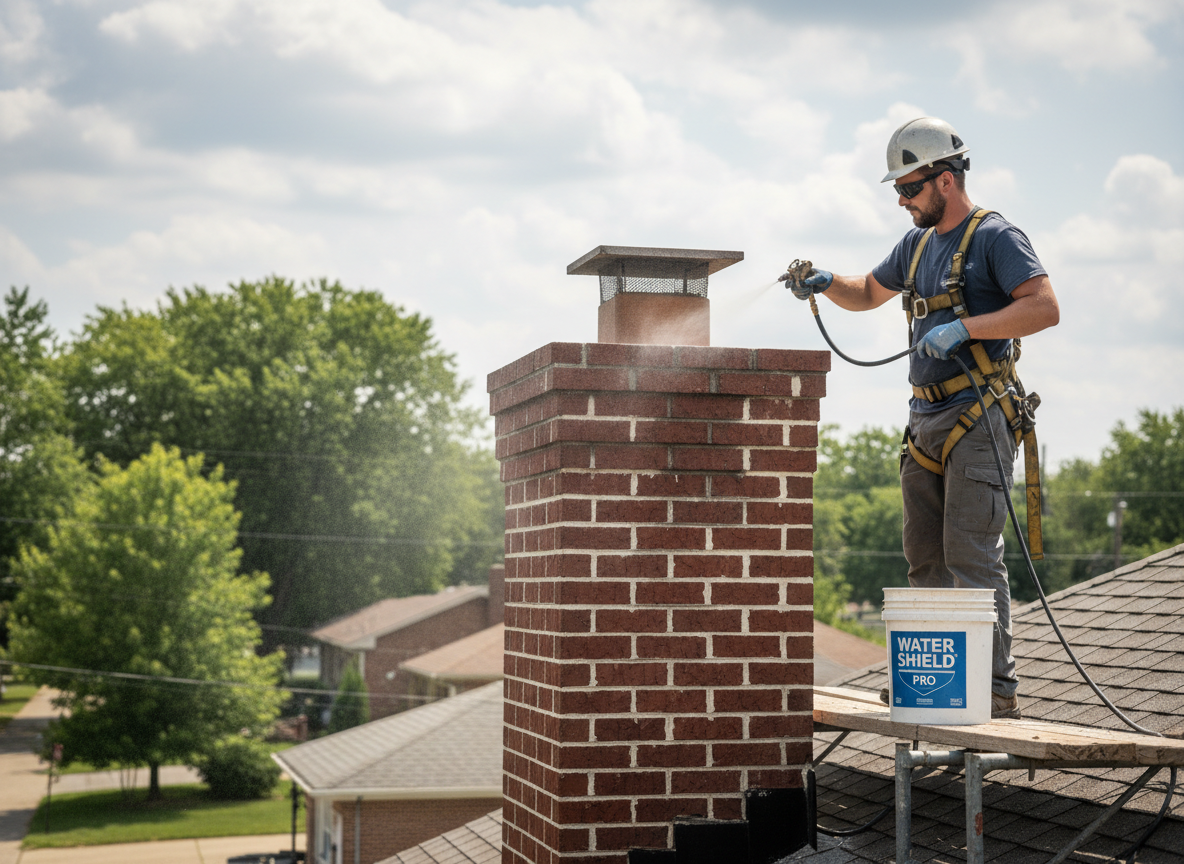
Chimney waterproofing in Clinton requires attention to the semi-arid climate's sharp temperature swings. Hot summers dry out mortar while cold snowy winters drive moisture deep into brick and flue liners. Homes in Clinton Central and West Clinton often feature masonry chimneys from the 1970s onward that were never originally sealed against repeated freeze-thaw action common across Davis County.
We use breathable silane-siloxane sealers that penetrate masonry without trapping vapor. Edge cases include chimneys near Clinton City Park where wind-driven rain from the west adds extra exposure and older flues shared with wood-burning inserts that have developed hairline cracks. Application must avoid coating the flue interior or interfering with draft, and we always check for proper termination height relative to nearby rooflines in Roy and Clearfield.
Homeowners sometimes attempt DIY sprays that fail within one season because they do not address the crown and flashing interface. Proper prep includes removing efflorescence and repairing any open joints first. In Ogden-adjacent areas with similar soil conditions, we have seen untreated chimneys develop spalling after only two winters of snow accumulation followed by rapid thaws.
Code considerations in Davis County require maintaining clearance and ensuring the waterproofing does not create a combustible surface. We schedule most work in early fall before the first snow so the sealer can cure fully during the remaining warm days.
Technician insight
In Clinton, the thing that catches most people out with Chimney Waterproofing is the way snow sits on flat crowns through multiple freeze-thaw cycles on 1970s-1980s homes in Clinton Central; the melt water then pushes under flashing that was never detailed for our winters.
West Clinton Masonry Chimney
Problem: repeated interior staining after heavy snow. What we found: unsealed crown and open joints allowing meltwater to migrate. What we did: prepared surfaces and applied penetrating sealer to all masonry and crown. Outcome: no further staining reported after the next winter season.
How it works
- 1
Site Assessment
Inspect chimney exterior, crown, flashing, and interior flue for existing damage or moisture paths in Clinton homes.
- 2
Surface Preparation
Remove loose mortar, efflorescence, and debris so the sealer bonds directly to sound masonry.
- 3
Sealer Application
Apply breathable waterproofing treatment to all exposed masonry surfaces and crown while protecting adjacent roofing.
- 4
Final Inspection
Verify coverage, check draft, and confirm no sealer has entered the flue before leaving the West Clinton or Clinton Central property.
Pricing
Upfront quotes based on chimney size, condition, and access; 24/7 scheduling available from our Clinton base.