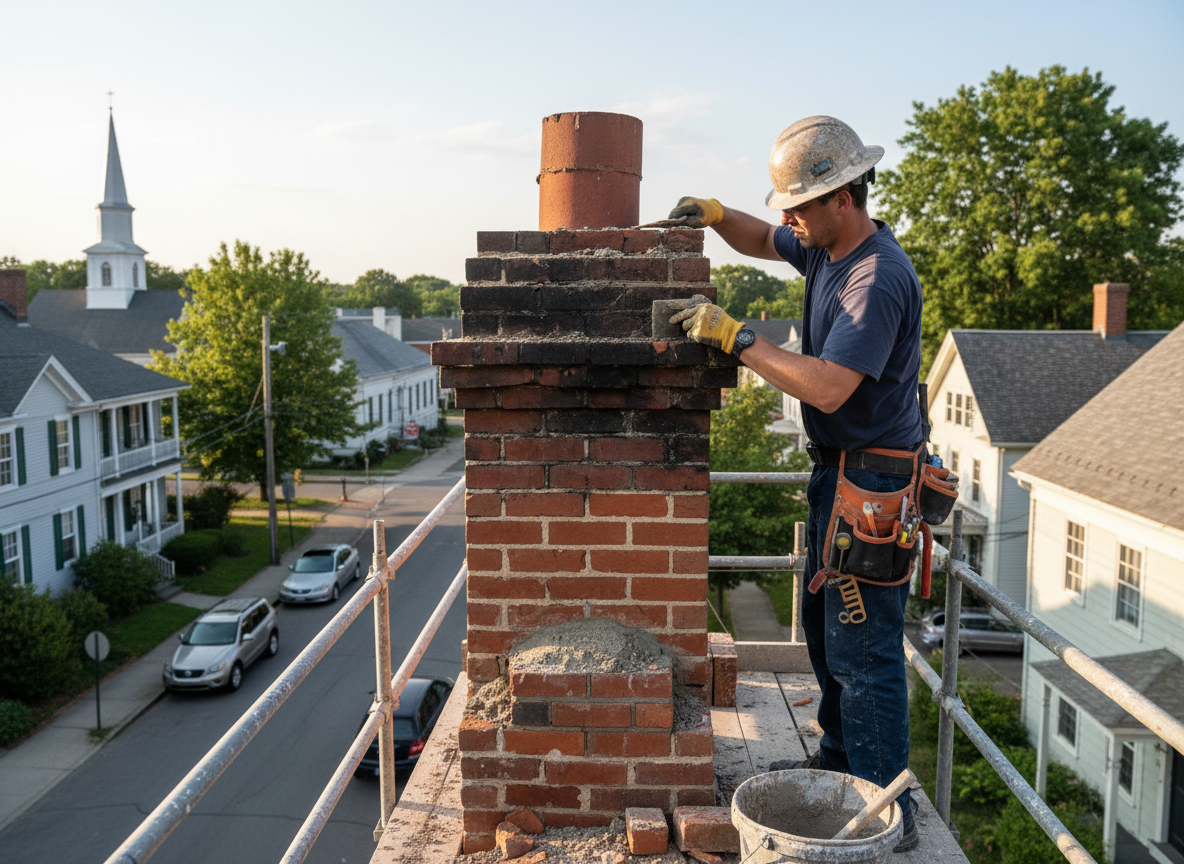
Clinton homes in Clinton Central and West Clinton often feature masonry chimneys built from the 1970s onward that suffer from repeated freeze-thaw damage during cold snowy winters. Mortar joints crack as moisture from snowmelt expands and contracts, especially on flues facing prevailing winds. Semi-arid summers then bake the exposed brick, accelerating spalling on the crown and chase. Restoration requires removing loose material, repointing with high-lime mortar suited to local clay soils, and installing proper caps to block rain that otherwise pools near the Clinton City Park elevation where drainage is slow.
Work in nearby Roy and Clearfield reveals similar issues where older chimneys tie into single-story ranches with limited attic access. Technicians must navigate tight clearances around rooflines while preserving original brick that matches the neighborhood stock. Hot summer days make scaffolding setup uncomfortable and increase the risk of thermal shock if new mortar cures too quickly. Proper hydration control and shaded curing are essential to prevent hairline cracks that reopen after the first winter freeze.
Restoration also addresses water intrusion common along the Davis County bench where soil shifts slightly after irrigation. Flashing integration at the roofline must account for the expansion joints in homes near 1500 West. Skipping these steps leads to repeated leaks into living spaces during spring snowmelt. The process includes full inspection of the smoke chamber and liner condition before any masonry work begins to avoid hidden code violations on draft performance.
Technician insight
In Clinton, the thing that catches most people out with Chimney Restoration is how quickly snow piles against the north side of chimneys in West Clinton homes from the 1980s, then melts and refreezes right at the roofline near Clinton City Park, forcing water behind the flashing before homeowners notice.
West Clinton Crown Failure
Heavy spring snowmelt had caused repeated leaks into the attic of a Clinton Central ranch. Inspection showed the crown had cracked along the north face from repeated freeze-thaw cycles. We removed the failed masonry, rebuilt the crown with proper slope and new flashing tied into the existing roof, then installed a cap. The homeowner reported no further water entry after the next winter storm.
How it works
- 1
Initial Inspection
Assess chimney condition from crown to firebox, checking for spalling, loose mortar, and liner integrity in Clinton homes.
- 2
Damage Removal
Carefully dismantle deteriorated sections without disturbing sound masonry, focusing on areas hit hardest by West Clinton snow loads.
- 3
Masonry Repair
Repoint joints and rebuild crown using materials matched to local brick and climate demands for long-term durability.
- 4
Weatherproofing
Install new flashing, cap, and sealant suited to Davis County freeze-thaw patterns and hot summer UV exposure.
- 5
Final Testing
Verify draft performance and water resistance before cleanup at the 2267 N 1500 W location.
Pricing
Upfront quotes after on-site inspection; cost varies by extent of masonry damage and access in Clinton neighborhoods.