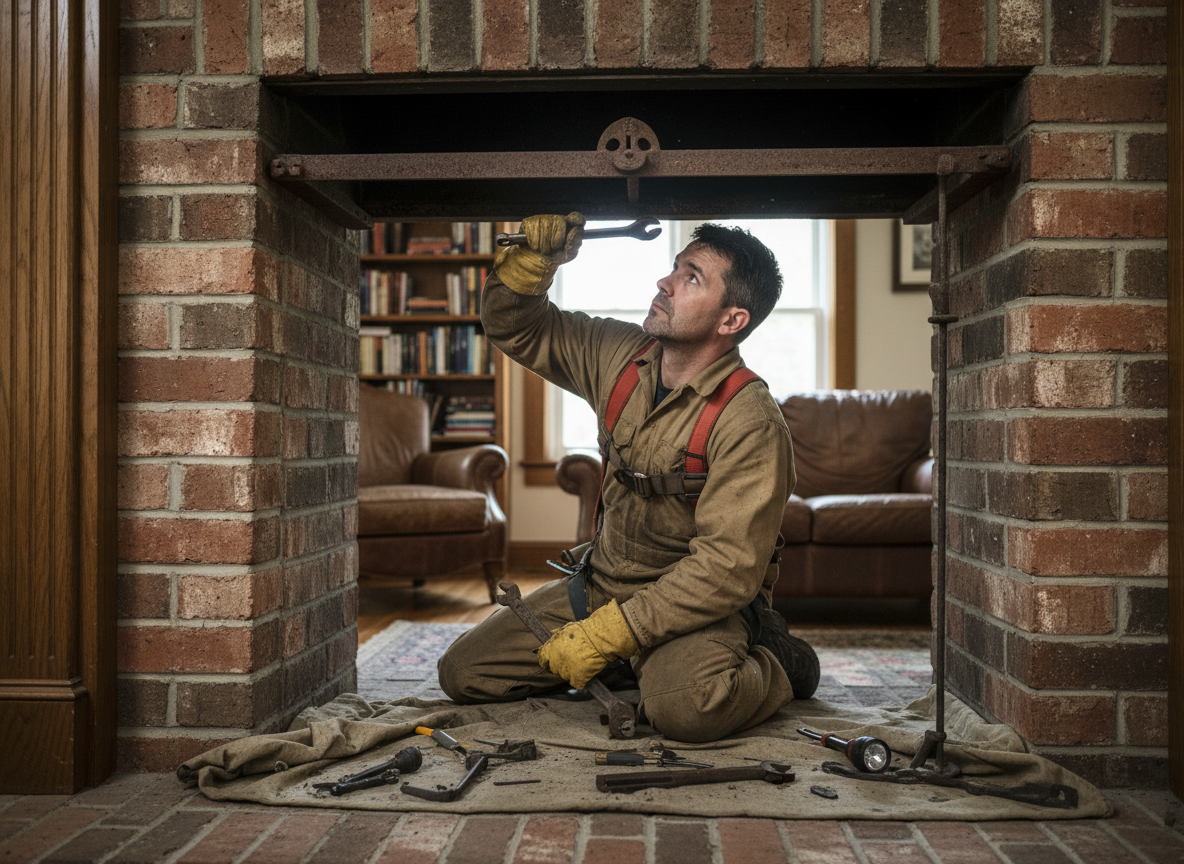
In Clinton homes built decades ago across Clinton Central and West Clinton, dampers often seize from repeated freeze-thaw cycles in our semi-arid climate. Cold snowy winters drive moisture into flue liners while hot summers dry out seals, creating binding points that standard visual checks miss. A tech working from 2267 N 1500 W sees warped plates and corroded pivots on properties near Clinton City Park where wind funnels snow directly into chimneys.
Repair begins with confirming the damper type and access route before any disassembly. In Davis County housing stock, many units sit behind brick or stone that shifts slightly with soil movement, so forcing a stuck plate risks cracking the surrounding masonry. Replacement parts must match the original opening size exactly because aftermarket dampers rarely seal against the cold drafts that push through during Ogden-area winter storms.
Edge cases appear when homeowners in Roy or Clearfield have added gas logs without updating the damper mechanism. The added heat accelerates metal fatigue on older cast-iron plates, leading to sudden failure mid-season. Technicians always verify the flue is clear of creosote buildup before testing operation because a partially open damper in snowy conditions allows ice to form on the mechanism itself.
Final adjustment includes checking the handle or cable tension so the plate closes fully without binding. Local terrain and prevailing winds mean even minor gaps create noticeable drafts on the main floor during January nights. Every job ends with a functional test from inside the home to confirm the seal holds under actual pressure differences.
Technician insight
In Clinton, the thing that catches most people out with Chimney Damper Repair is how our cold snowy winters combine with older masonry in Clinton Central homes to bind the plate after just one hard freeze. Homeowners near Clinton City Park often try to force the handle and crack the flue tile without realizing the soil movement here shifts the whole chimney slightly each year.
Seized Damper After Early Snow
A West Clinton homeowner noticed smoke rolling back into the living room once temperatures dropped. Inspection revealed the damper plate frozen in a half-open position from repeated snow entry during the first storm of the season. We freed the pivot, replaced the corroded seal, and adjusted tension so the plate closed fully against the cold air. The fireplace now drafts correctly without interior smoke or heat loss.
How it works
- 1
Initial Assessment
Inspect the damper plate, pivot points, and cable or handle assembly from the roof and fireplace opening while noting any creosote or ice accumulation.
- 2
Access and Cleaning
Remove built-up debris and test movement, documenting whether the issue stems from corrosion, warping, or misalignment caused by winter conditions.
- 3
Component Repair or Replacement
Straighten or replace the plate and seals using materials suited to repeated freeze cycles common in Davis County.
- 4
Final Testing and Adjustment
Verify full closure and smooth operation, then confirm the system holds against typical winter wind loads near Clinton City Park.
Pricing
Cost depends on access difficulty, part condition, and whether the home sits in older Clinton Central stock or newer West Clinton builds; 24/7 response available from our Clinton address.