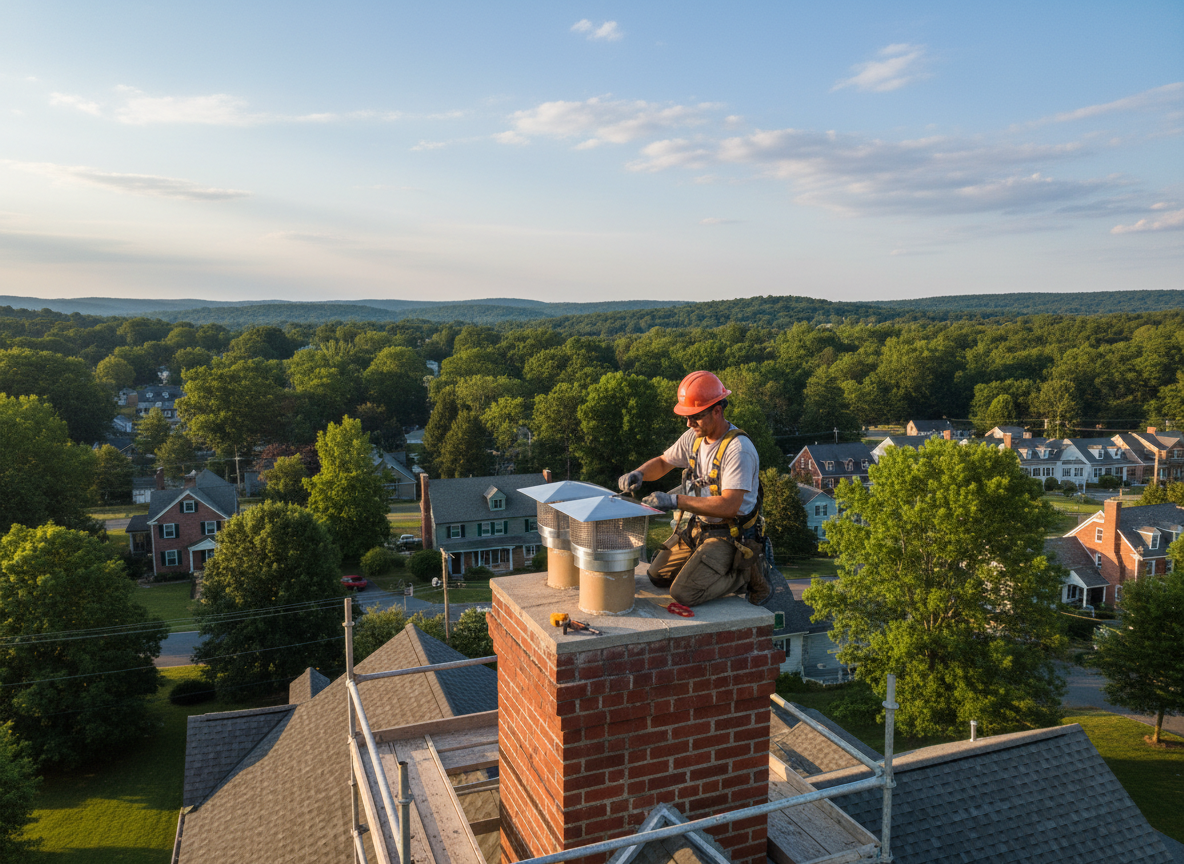
Chimney caps in Clinton must handle heavy snow loads from cold winters while resisting corrosion in the semi-arid summers. Homes in Clinton Central and West Clinton often feature masonry chimneys built decades ago that need caps sized precisely to the flue to avoid restricting draft. A poorly fitted cap allows wind-driven snow from Davis County storms to enter, leading to interior moisture damage during freeze-thaw cycles common between Ogden and Clearfield.
We select stainless steel or galvanized caps with spark arrestors rated for the wind exposure near Clinton City Park. Edge cases include ranch-style homes with low-pitch roofs where caps must sit higher to clear drifting snow, and two-story structures where ladder access requires extra stabilization on uneven terrain. Local code in Davis County requires caps that prevent ember escape, so we verify fit against existing flue dimensions before securing with proper flashing to stop water intrusion at the crown.
Installation accounts for the area's soil movement and temperature swings that can shift chimney crowns over time. We inspect for cracked clay tiles or settling mortar joints first, then install the cap with non-corrosive hardware that withstands both summer heat and winter ice. This prevents common failures seen on older stock near Roy where uncapped flues allow birds and debris to block exhaust during peak heating months.
Technician insight
In Clinton, the thing that catches most people out with Chimney Cap Installation is underestimating how quickly winter snow packs into an open flue on homes in West Clinton when the cap sits too low or lacks proper overhang. The freeze-thaw cycles here loosen mortar faster than in drier parts of Davis County, so we always check the crown seal first.
West Clinton Ranch Home Cap Upgrade
Homeowner noticed water stains near the fireplace after a heavy Davis County snow. We found the old cap had rusted through and allowed meltwater down the flue. Replaced with a taller stainless cap and resealed the crown. No further moisture issues reported through the following winter.
How it works
- 1
Site Assessment
Measure flue dimensions and inspect crown condition on-site in Clinton neighborhoods.
- 2
Material Selection
Choose cap style and metal type suited to local wind and snow exposure.
- 3
Preparation
Clean flue top and repair minor crown cracks before mounting hardware.
- 4
Installation
Secure cap with flashing and verify draft clearance from ground level.
- 5
Final Check
Test for stability and confirm no gaps that allow snow entry.
Pricing
Cost depends on chimney height, flue size, and material; upfront quotes provided after inspection.