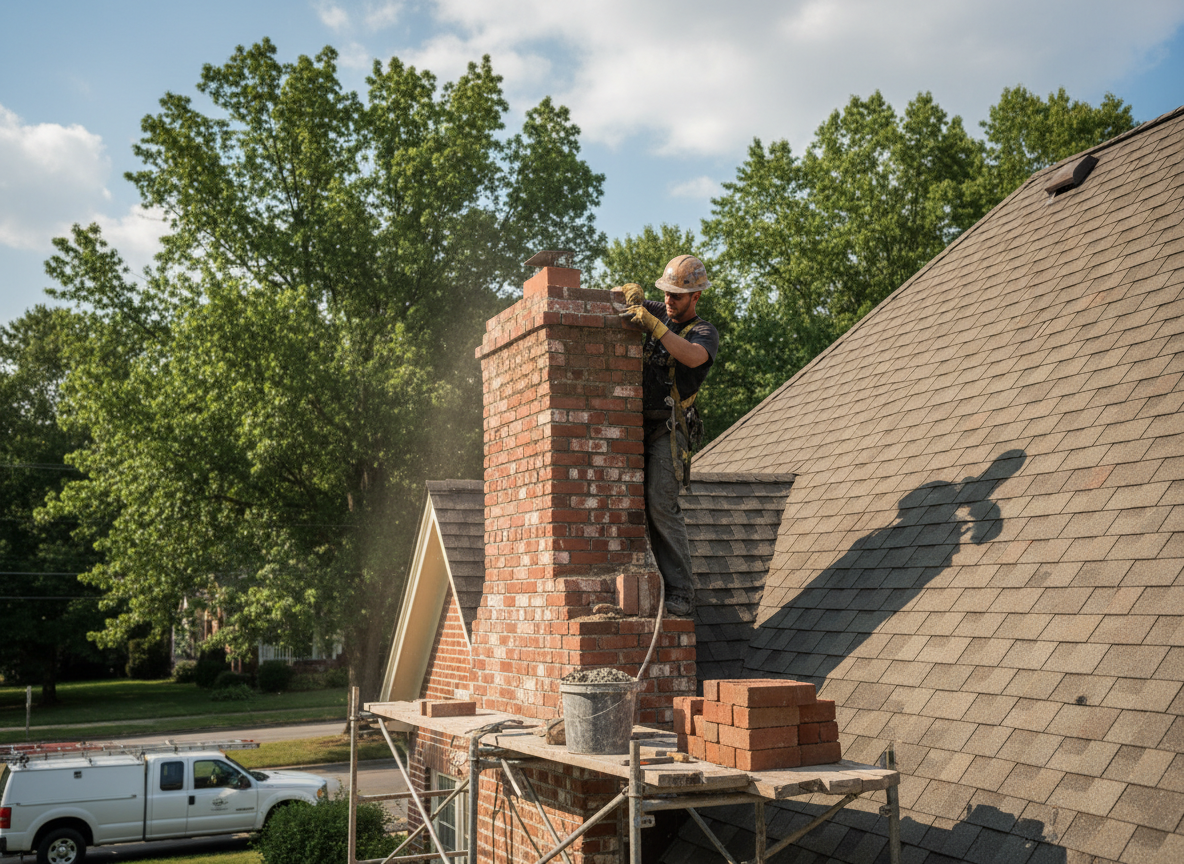
Clinton sits in Davis County where cold snowy winters alternate with hot summers, creating repeated freeze-thaw cycles that crack mortar joints and spall brick faces on chimneys. Homes in Clinton Central and West Clinton often date from the 1970s through 1990s with common running-bond brick stacks that lack modern flue liners, allowing water to penetrate and freeze behind the masonry. When mortar erodes, carbon monoxide pathways open and draft issues worsen during the long heating season. Repair work here starts with removing loose material down to sound brick, then repointing with type N mortar matched to the original compressive strength so the stack can handle thermal movement without new cracking.
Near Clinton City Park and along routes toward Roy and Clearfield, many chimneys sit on slab foundations that shift slightly with the area's variable soil moisture. This movement opens vertical cracks at the roofline flashing, letting snowmelt run directly into the brick core. Technicians cut out failed sections, install new through-wall flashing with weep holes, and rebuild with salvaged or matching brick rather than attempting surface patches that trap moisture. In the semi-arid climate, summer UV and wind also dry out older lime mortar, so crews test moisture content before repointing and add a breathable sealer only after the work cures for at least 28 days.
Edge cases appear when homeowners in Ogden-adjacent neighborhoods have added gas inserts without updating the chimney crown. The new heat cycles accelerate spalling on the outer wythe. Proper repair includes rebuilding the crown with a reinforced concrete cap sloped to shed water and installing a stainless-steel chase cap sized to the insert flue. All work stays outside the living space to avoid disturbing possible asbestos in older ducting common in Davis County homes of this era.
Technician insight
In Clinton, the thing that catches most people out with Brick Chimney Repair is how the freeze-thaw cycles in Davis County winters open vertical cracks right at the roofline flashing on 1980s brick stacks. Homeowners in West Clinton often try caulk or surface patches that trap moisture and make the next winter worse. The real fix requires cutting back to sound material and adding proper through-wall flashing before the crown goes back on.
West Clinton Stack with Failed Crown
A Clinton Central homeowner noticed water stains on the ceiling after heavy snow. Inspection revealed the crown had cracked and mortar joints below the roofline had eroded from repeated freeze-thaw. Crews rebuilt the crown with a sloped reinforced cap, installed new flashing, repointed the upper ten courses, and verified draft. The leaks stopped and the chimney now handles the next snowy season without further water entry.
How it works
- 1
Site Assessment
Inspect the full stack from crown to foundation, checking mortar condition, brick integrity, flashing, and draft in Clinton homes.
- 2
Material Removal
Cut out damaged brick and mortar to sound substrate while protecting roofing and landscaping around the 2267 N 1500 W service area.
- 3
Rebuild and Repoint
Install new or matching brick, repoint joints, and rebuild crown with proper slope and flashing for local freeze-thaw exposure.
- 4
Final Test and Seal
Verify draft, clean work area, and apply breathable sealer once mortar has cured.
Pricing
Upfront quotes provided after on-site inspection; final cost depends on height, extent of brick replacement, and access.