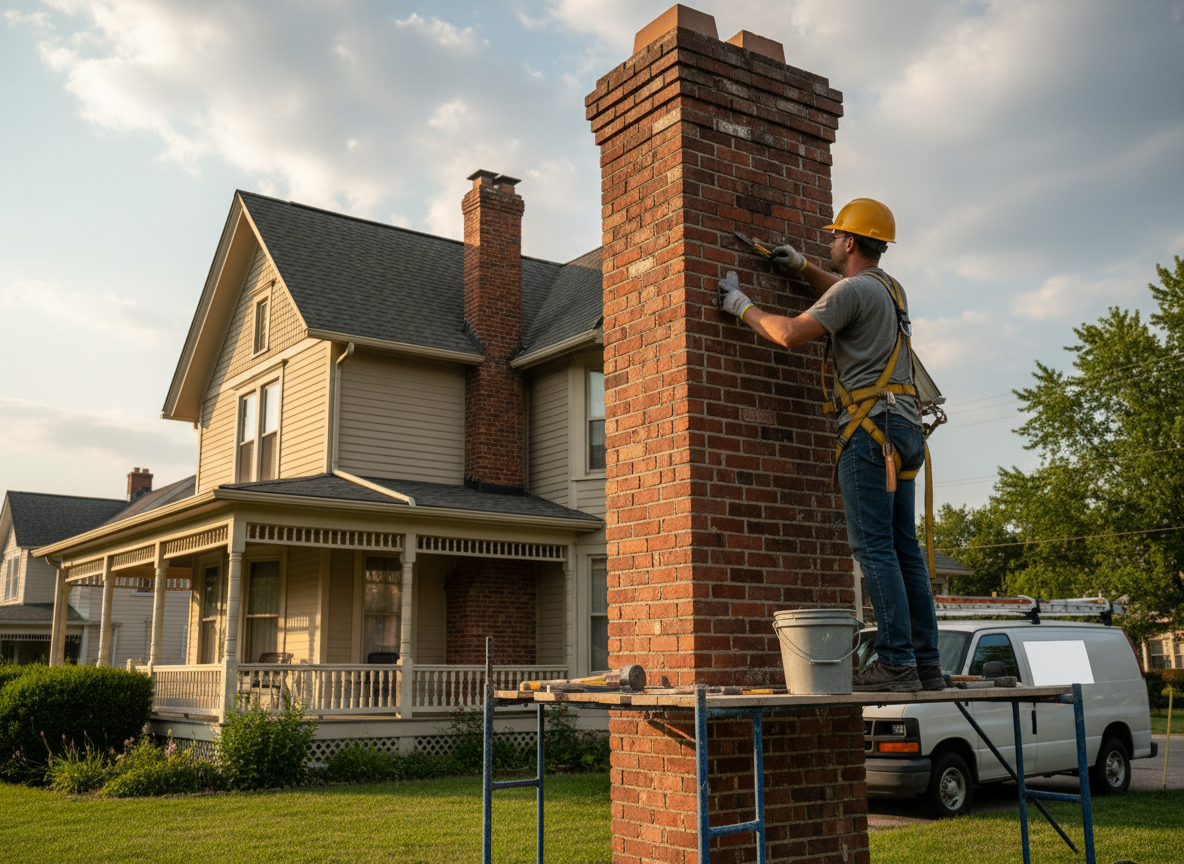
Chimney repair in Clinton requires attention to the freeze-thaw cycles common in Davis County's semi-arid climate. Cold snowy winters drive moisture into mortar joints and flue liners, leading to spalling brick and cracked tiles that allow exhaust leaks. Homes in Clinton Central often feature original masonry chimneys from the 1970s and 1980s that lack modern stainless liners, making them vulnerable to creosote buildup and ice dams near Clinton City Park. West Clinton properties sit on slightly higher ground with more wind exposure, accelerating crown deterioration during spring thaws.
Technicians address these conditions by first removing loose debris and testing draft with a smoke test before any tuckpointing or liner work. Matching original brick and mortar color prevents visible patches on historic stacks while meeting current Davis County venting codes. Hot summers add little stress, but they are the best window for crown sealing before the next snow load arrives. Ignoring minor cracks now often leads to full flue replacement later when carbon monoxide risks rise in tightly sealed newer builds near Roy and Clearfield.
Repair crews carry both clay tile and stainless-steel options to match the chimney's age and fuel type. In older Clinton homes with multiple flues, separating water heater and fireplace vents prevents backdrafting during high winds common along 1500 West. Every job ends with a camera inspection to confirm no hidden voids remain in the chase.
Technician insight
In Clinton, the thing that catches most people out with chimney repair is how quickly our cold snowy winters open mortar joints on 1980s brick stacks in West Clinton. Homeowners often wait until they smell smoke indoors, but by then the flue liner has already shifted and the job moves from simple tuckpointing to a full stainless insert.
Cracked Liner After Heavy Snow
A Clinton Central homeowner reported poor draft following several weeks of below-freezing temperatures. Inspection revealed a split clay liner from ice expansion. We removed the damaged section, installed a stainless-steel liner, and resealed the crown. Draft returned to normal and the system passed final testing.
How it works
- 1
Site Assessment
Arrive at the Clinton address and inspect the full chimney exterior and interior from roof to firebox while noting nearby tree cover and roof pitch.
- 2
Draft and Liner Evaluation
Perform smoke and camera tests to locate cracks, creosote deposits, or liner separation caused by repeated freeze cycles.
- 3
Targeted Repair
Tuckpoint mortar, install new stainless liner sections, or rebuild the crown using materials compatible with existing masonry.
- 4
Final Verification
Re-test draft, clean work area, and provide the homeowner with photos and maintenance recommendations for the next winter season.
Pricing
Upfront quotes after on-site inspection; final price depends on liner length and masonry access.